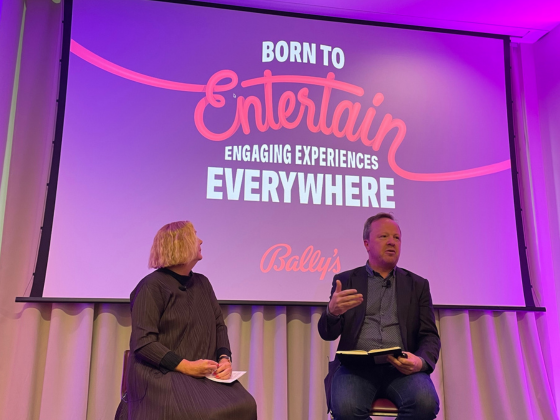
Last Friday morning saw us on Fleet Street for a breakfast seminar with Wazoku. If the business you work for is keen on innovation – and it’s one of the most common values we see in our work – then do follow Wazoku. They’re the creators of Ideas Spotlight, a software platform allowing colleagues to contribute, ‘like’ and share ideas, and then track their progress.
As Simon Hill, Wazoku’s founder, pointed out though, the software is just an enabler. Innovation in any business will succeed only where there is leadership support for it. There’s no point implementing any kind of innovation programme, or having innovation as a value, unless colleagues in all teams, at all levels, feel they have ‘permission’ to be creative.
Surprisingly, some of the most avid adopters of Wazoku are companies where one wouldn’t imagine innovation was a key driver. On Friday we heard from Eugene McConlough, Engagement Manager for train operator Southeastern. Many of Southeastern’s 4,000 employees are out driving and maintaining trains; they’re not connected to each other in the same way as larger, office-based businesses.
Yet Eugene’s innovation programme has succeeded in tapping into the genuine passion of those employees who want to provide good customer experience. It’s given them a voice to share their ideas; ideas gathered from their actual dealings with Southeastern customers, day in, day out. Importantly, they see their ideas being listened to and acted upon by business leaders. What greater recognition than that?
We could spend all day defining a ‘successful’ innovation programme. In the case of Southeastern, it’s created a three-way connection between business leaders, grass-roots colleagues and customers. It’s inspired colleagues to take pride in the service they provide, and to seek continually for ways to improve that service.
As a Southeastern customer, I find that reassuring. So a successful innovation programme is not just an internal engagement piece; it’s the basis of a powerful marketing message too.