Gartner predicts that 20% of organisations will use AI to flatten their organisation structure, eliminating more than half of middle management positions.
The big industry voices are telling us line managers and middle managers are on the way out – but is this really true? Or even practical?
Line managers sit at the crucial junction point between the C-suite and the wider workforce. They are mediator, conduit and advocate. Taking on all of these crucial roles, especially during times of change and transformation, there is clearly credence to Alys O’Neill’s suggestion that ‘line managers are the real guardians of company culture.’ Their input can affect anything from employee experience to the successful implementation of new strategies or aversions of calamities.
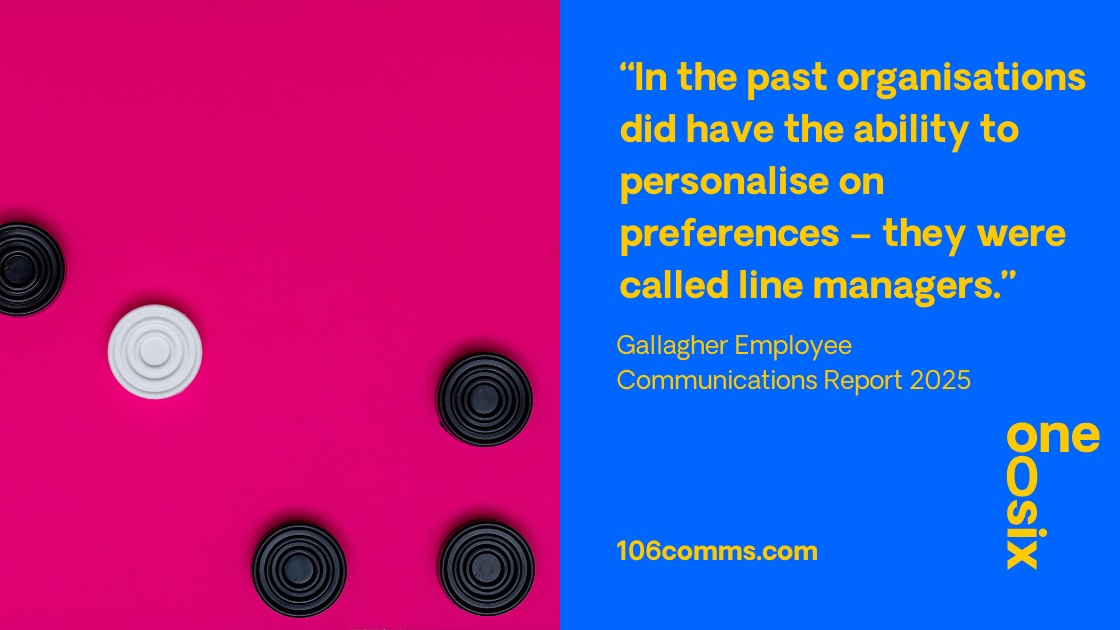
And let’s not forget this gem from Gallagher’s Employee Communications Report 2025:
“In the past organisations did have the ability to personalise on preferences – they were called line managers.”
Employees are weathering the constant uncertainty organisations are facing, the sheer relentlessness of change and the existential questions thrown up by AI. 70% of the variance in team engagement is determined solely by the manager (Gallup). We need people to listen, to communicate clearly and foster trust. Kind of sounds like we need line managers…
So, if the output is an engaged guardian of culture and nurturer of the human – what’s the input?
Training. Currently, only 44% of managers receive training. However, Gallup’s research shows that not only does training improve their efficacy, it also halves the chance of managers becoming actively disengaged (i.e. actively working against the aims of the organisation).
AI is a solution to some challenges, but not all. Why are we trying to replace line managers when often we haven’t even given them the opportunity to do their best?