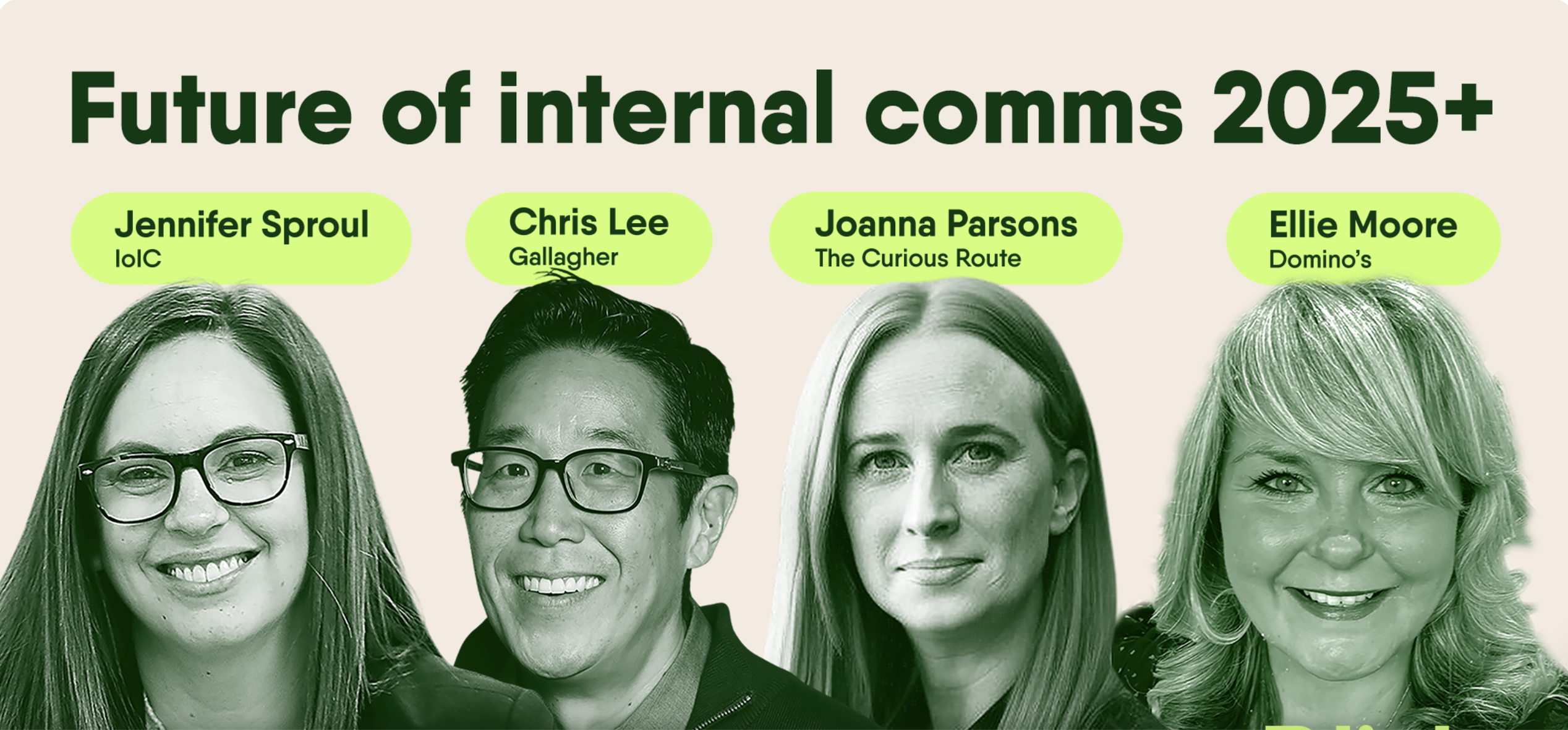
Spaced out over two days, the Gallagher Communications Summit really packed a punch.
We’ve decided to condense it into a few key themes, so you don’t have to wade through treacle to get to the core of what was important. Have a read!
Making the most of managers
It’s of utmost importance to utilise them, and their relationships and face-to-face time on the ground with colleagues.
To cascade comms effectively, you’ve got to get ahead of them. If you know a big change in on the way such as a merger, acquisition, reorganisation, or a new strategy, have a roadmap for communicating this change, which includes the education of managers and leaders significantly before the change happens.
This means not only will they feel more informed, but they’ll have greater buy-in, and understanding to disseminate information when the time comes.
They don’t need to have all the answers, so focus on core knowledge, and build the psychological safety to say “I don’t know” to unexpected questions and circle back later. This keeps comms accurate, truthful, and stress-free to deliver.
Also, make sure comms are delivered by familiar faces, it’s often more impactful. There’s a storytelling element too, stories invoke emotion, and up retention of information. Combine this delivery by a known senior team member makes for communications that stick.
Putting yourself in the shoes of others
Three elements here – firstly for frontline workers. Before you set out to do any sort of communication, think about theirday. Map it out – from waking up, to arriving at work, to lunchtime, to leaving work, to going home – and move through it, visualising where and when they’d actually receive communications, and what would be important to know in their day. This keeps comms relevant, focused and are meaningful to those on the ground.
The second element is listening, listening itself is a form of communication. Asking, not just talking, gets to the meat of what matters, and helps surface anxieties or uncertainties so you can tackle them directly with bespoke comms. You want to stay out of that ‘murky middle’ (our favourite phrase from the conference) where people are left unsure about what’s going on.
Finally, don’t forget to have a bit of personality with it all. You’re a human, and so are your colleagues. Nobody wants a constant drone of corporate-sounding comms. A bit of character, a pun, a joke, where appropriate, makes comms relatable and more fun.
Comms with less hierarchy
An interesting idea from the conference: comms more by the people, for the people… “Flatness” isn’t quite right, as levels of management still matter – but there’s real merit in democratising comms.
Making platforms more accessible, and removing boundaries and silos across organisations and geographies, opens the gates for free-flowing information. This can be extremely beneficial from helping build shared community and organisational identity, and to helping spot good processes happening elsewhere.
Culture and connection are the real selling points here (even if harder to measure). ODEON, for example, prioritised colleague connection in their digital channels and saw 74% adoption across 9,000 colleagues — without even making the channel mandatory, just because people wanted in.
So, plenty to think about. Every organisation’s different, but there’s likely a little something here worth taking away.